
"Cynthya was our doula for the birth of our third child in April 2016. As this was my third birth, and I had been attended to by a doula at the first two, I knew that finding the right doula was crucial to a successful and satisfying birth." - Winter Wheeler-Young

Fertility and the Tilted Uterus
The uterus can become malpositioned due to any kind of physical or sexual/emotional trauma to the pelvic or sacral area and can tilt in a number of directions. Ovulation can become difficult or compromised when the uterus is tilted to a side and weighted upon the egg-releasing ovary.
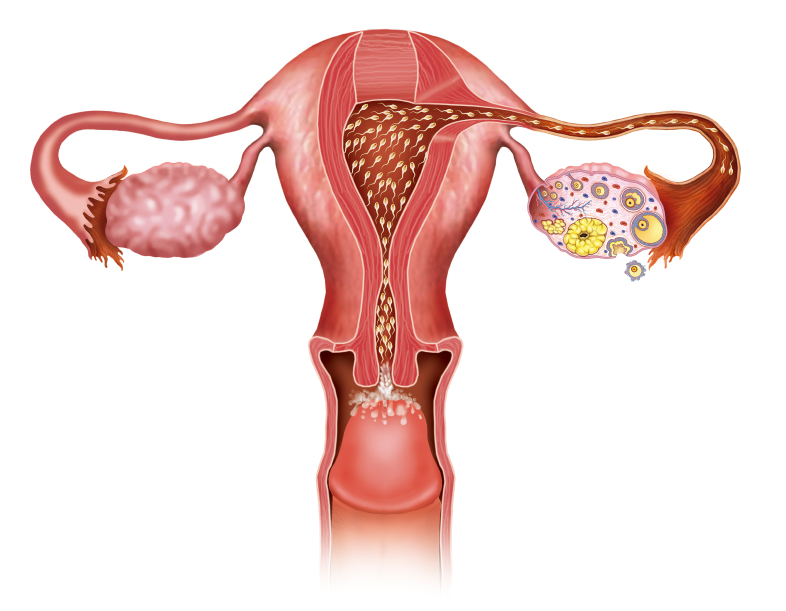
There's a little known cause of infertility and chronic miscarriage that Western doctors often dismiss: the tilted uterus.
The uterus can become malpositioned due to any kind of physical or sexual/emotional trauma to the pelvic or sacral area and can tilt in a number of directions:
To the right or left side
Backwards onto the colon (termed retroversion or retroflexion)
Forward onto the bladder (anteversion)
Downward (prolapsed) to varying degrees- the worst of which is when the uterus actually falls out of the vaginal canal.
These various uterine positions can hinder getting and staying pregnant in the following ways:
Ovulation Compromised
Ovulation can become difficult or compromised when the uterus is tilted to a side and weighted upon the egg-releasing ovary (oftentimes creating pain during ovulation).
Hindered Fertilization
Fertilization can become compromised when the fallopian tubes are weighted upon by the displaced uterus (at times sperm are able to make their way into the fallopian tube, creating higher risk for life-threatening ectopic pregnancy, a 1 in 50 risk for women).
Toxic Uterus
The intrauterine environment can become toxic due to inability of menstrual blood to flow out completely during menstruation. This can potentially create a space where sperm or fertilized ovum (embryo) are unable to survive.
Higher Risk of Miscarriage
Menstrual blood not able to flow out during menstruation will pool and coagulate along the inner wall of the uterus- creating a 'false' or 'weak' wall upon which the embryo implants. As the embyro grows and becomes a fetus (at about 8 weeks) it's added weight can pull the placental site away from the uterine wall causing miscarriage.
The Traditional Medicine Approach
Amongst the complementary/alternative health modalities available to help couples challenged with infertility are the Arvigo Techniques of Maya Abdominal Therapy™, techniques are founded on the ancient Mayan technique of abdominal massage which is an external non invasive manipulation that repositions internal organs that have shifted, thereby restricting the flow of blood, lymph, nerve and chi. Also included in sessions/consultations are a look at potential contributing dietary and lifestyle factors, and what (if any) use of herbal remedies might be appropriate for the individual in relation to where they are in their healing process. To learn more please visit www.arvigotherapy.com.
Written by Reid Forrester, a massage therapist, yoga instructor, and long-time women's health practitioner in the Atlanta area. Her practice focuses on helping women overcome infertility and move on to have healthy pregnancies and births.

A Pioneer in Natural Obstetrical and Pediatric Care
Suggestions for natural inductions and a discussion medical "reasons" to induce labor such as "a big baby" and "overdue mamas".

Aviva Romm, MD is both a certified nurse midwife and integrative physician. As an herbalist, she has authored many books on the subject of women's health and herbal medicine. She recommends a natural approach to healing that replaces or compliments pharmaceutical prescriptions of today's medical community. She has an extensive blog, which shares her women's centered ideas and holistic remedies, proving her to be a pioneer of natural healing in obstetrical care. Aviva's website also offers online courses for self-study of botanical medicine, called WomanWise.
This article includes her suggestions for natural inductions and her opinion of "The Gray Zone" - medical "reasons" to induce labor such as "a big baby" and "overdue mamas". The national average of medical inductions is over 23% and the World Heath Organization recommends no more than 10% of all births. Something's gotta give.
Take control of your health, and remember that medical doctors are human beings with special training (not special powers!) who may be consulted when considering your options and whose opinion may or may not be the advice you follow to stay healthy. Most medical doctors seem to push drugs and ignore alternative methods or natural remedies. YOU need to educate yourself so that you can be confident in your health care.
Be well and take care,
Cynthya
Related articles:
Why I Left Labor and Delivery
Maternity Care in America
Holistic Care For Your Child After Using A Doula
How to Avoid a Cesarean: Atlanta Hospital C-Section Rates

Are you worried a doula will kill the intimacy of labor?
Unless you plan to have an unassisted birth at home, you will be interacting with many people during your labor day at the hospital. Doulas are the guardians of the couple and their birthing environment.
Unless you plan to have an unassisted birth at home, you will be interacting with many people during your labor day at the hospital.

After you've been admitted to your birthing facility, a representative from the hospital's admission office may come knocking for additional information from you or to have you sign more paperwork. Sometimes a technician from the lab comes in to take blood samples from you, otherwise your assigned labor and delivery nurse will do this while inserting your IV port, if desired. Your midwife or doctor (or whoever is on call that day) will be checking in with you periodically throughout your labor, either in person or via your maternity nurse by telephone.
Occasionally, nurses train other nurses or have "shadows" and you'll get two for the price of one! Your nurse(s) need to take breaks and a back-up nurse will fill-in for short periods of time. If your nurse is also assisting another patient and that person delivers their baby before you do, your nurse might be unavailable for quite a while.
Also, if there is a hint of meconium present when your amniotic sac breaks, a team of respiratory specialists are called to be present during the last 10-20 minutes that you are pushing to birth your baby.
It's Just Another Busy Day...
Sometimes members of the hospital maintenance staff (or other random employees) knock, enter, and then realize they are in the wrong room. Or maybe another nurse needs an item from your room, has to turn on the light to find it, and then forgets to shut it off as she leaves with the retrieved item. Sounds busy, right? Imagine trying to relax, sleep or walk around naked through all of this.
Guardians of Your Birthing Environment
A doula can preserve the intimacy of the birthing room and be a consistent care provider for you and your partner. Doulas maintain the ambience of a labor room, keep good energy flowing, and help limit distractions, which allows the couple to relax and know they are cared for. Your doula wants to make sure that you both enjoy the birth of your child and has only your interest in mind. After all, birth is her passion and you've hired her for this special event - use her to your full advantage.
Be well and happy,
Cynthya
Related articles:
Epidural, Please!
Labor Tips For Birth Partners
How To Avoid a C-section

How To Use A Moby Wrap to Wear Your Baby
This video tutorial shows how to wrap your newborn correctly enabling you to move freely and have the use of both your hands while working around the house, walking outside, etc.

Photo credit: Moby Wrap
The Moby Wrap is a "sling" or "baby carrier" that has a LOT of fabric, which winds around the body making deep pockets to hold a baby. You can even breastfeed hands-free while wearing a Moby Wrap. Baby-wearing is proven to increase hormone levels, lower incidence of illness, significantly reduce crying, and decrease the risk of flat head syndrome. Read more and view the infographic at Moby Wrap.
This video tutorial shows how to wrap your newborn correctly enabling you to move freely and have the use of both your hands while working around the house, walking outside, etc. As your child grows, the Moby Wrap can be tied in different ways allowing you to carry up to 35 lbs., which is typically the weight of a 3 year old child. More information about multiple Moby Wrap positions along with pdf instructions, can be found at www.mobywrap.com.
Be well and happy,
Cynthya

Bottle Alternatives: Preparing for Breastfeeding Challenges
Unfortunately, there are times when a baby refuses to breastfeed. This video shows how a baby can "lap" up breast milk instead of feeding from a bottle.
I advise soon-to-be parents to enroll in an in-person breastfeeding class or hold a private in-home lesson before their baby is born so they can learn a proper latch, multiple holds, and also how to store and share milk safely. You can enroll in an online class too. Maybe to fill the time as you patiently wait for labor to start?
Get Lactation Link’s three signature online courses: Breastfeeding Basics, Breastfeeding Hurdles and How-To’s, and Pumping and Storing Breastmilk. These courses will show you exactly what you need to get started breastfeeding and manage common problems. Also, learn how you can pump and store your breastmilk for planned or unplanned time away from baby. Register for this online breastfeeding class (affiliate link) here.
If you try to "wing it" and run into any difficulty after you leave the hospital, contact a Lactation Consultant immediately to fix a problem before it take root. Most insurance companies reimburse the total cost (or at least a good portion) of the cost of a consultation so have a consultant’s number on speed dial.
Unfortunately, there are times when a baby has significant issues with breastfeeding. While it may be fastest or easiest to feed baby formula or pumped milk from a bottle, it’s too easy for babies to suck milk from an artificial nipple and this may interfere with long-term breastfeeding goals. Feeding baby with a syringe, supplemental nursing system, or cup can help protect the breastfeeding relationship while ensuring that baby is getting the right amount of food. Check out the below video, which shows how a baby can "lap" up breast milk instead of feeding from a bottle and be sure to save this post for later - just in case you find yourself needing extra guidance once baby arrives.

Delayed Cord Clamping or Wait Until Pulsation Ends?
For 175 millions years, Mother Nature continues to perfect the development and use of placentas for mammals. Modern obstetrics has intervened by creating a routine procedure of clamping and cutting the cord immediately after birth takes place.
For 175 million years, Mother Nature continues to perfect the development and use of placentas for mammals. Modern obstetrics has intervened by creating a routine procedure of clamping and cutting the cord immediately after birth takes place.
If the placenta is still working while the baby is getting to know the world outside the womb, it would ensure that the baby has sufficient oxygen while allowing him or her to get used to breathing on its own. Delayed cord clamping (approx. 5 minutes) allows the baby to receive all of the available nutrient rich blood that is rightfully theirs. Ask your doctor if there is a risk in waiting to cut the cord until pulsation has stopped on its own.
Dr. Nicholas Fogelson runs an informational blog and podcast called Academic OB/GYN. In his below video he shows the birth of kittens, a horse, and an orangutan to show that other land mammals don't clamp the umbilical cord and aren't concerned about immediate separation. Take a look!
Related articles:
Newborn Birth Injuries
10 Questions to Ask Your OB

Tools to Help Labor Progress
Traditionally, women in labor were surrounded by other women who had knowledge about childbirth. This is where a doula steps in to help.

The most common suggestions I make to clients during late pregnancy is for them to stay informed, rested and positive. (Create a bubble-of-peace around you!) During labor, I suggest they relax with music, aromatherapy, dim lighting, and hydrotherapy. While a client is at home during early labor, I typically suggest that she enjoys a long, warm bath to relax her muscles completely so she might be able to sleep between contractions. It is important for her to rest and allow labor to advance on its own. At the hospital, a long, warm shower provides pain relief but also facilitates labor progress.
There are more tips for labor progress listed at AskDrSears.com. This website is chock-full of many wonderful articles that address topics such as breastfeeding, nutrition, and vaccines. Take a look and see why I recommend this website to all my doula clients.
Traditionally, women in labor were surrounded by other women who had knowledge about childbirth. A midwife might have attended a homebirth along with the laboring woman's sisters, friends and mother who all had the necessary skills to support and comfort. With the development of obstetrics and 99% of babies being born in US hospitals or birth centers, women became estranged from the birth process, and family members lost their knowledge and confidence to guide a woman during childbirth. This is where a doula steps in to help. Doulas are trained to use comfort measures to prevent the need for pain medication, use positioning or acupressure to progress a stalled or slow labor, and to assist with breastfeeding immediately after the baby's birth. NPR wrote a tidy, quick summary of the popularized term "doula" and how we differ from midwives.
“Family members lost their knowledge and confidence to guide a woman during childbirth. This is where a doula steps in to help.”
Often after the birth of their baby, a new dad or partner will tell me that they couldn't have effectively supported their wife in labor without my help. (Sometimes I think my support is needed more by dads/partners than the birthing mama.) The truth is that everyone present needs support during labor whether they birth at home or in the hospital. Here is an interesting article that ran in The Huffington Post written by a new father and how he benefited by having a birth doula present during his wife's labor.
Be well and happy,
Cynthya


Achieve Optimal Fetal Positioning and Pelvic Tilt Demonstration
There are many simple ways to achieve optimal fetal positioning. Be sure to practice your posture and avoid furniture altogether, which can cause slouching.

The occiput anterior (OA) position of your baby is ideal for birth. OA means that your baby's head is down, facing your back with her back on one side of your belly. This allows her enough room to tuck her chin so that the smallest part of her head is first applied to your cervix in labor. If her head is down but in an occiput posterior (OP) position, the back of her head will put pressure on your spine during labor and may cause painful "back labor" that can be very long, exhausting and ineffective.
There are many simple ways to achieve optimal fetal positioning. Be sure to practice your posture and avoid furniture altogether, which can cause slouching. Try sitting cross-legged or in a cobbler's pose on the floor. Doing so helps to loosen you up and open your pelvis wide. Use a birth ball for sitting at your desk or while at the dinner table. Pelvic tilts should be done several times a day - watch the video below to learn the proper way to perform these. Walking at length and practicing prenatal yoga also help to move your hips and encourage your baby to move to an OA position.
Other techniques can be found at Spinning Babies, where you can also purchase a workbook to learn what position your baby is in by creating a belly map. Have fun!
Related articles:
Using a Rebozo For Back Labor
Make Labor Productive
AROM: To Break or Not To Break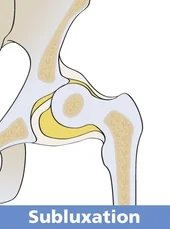
Swaddling Your Baby Correctly
Improper swaddling may lead to hip dysplasia since straightening the legs can loosen joints and damage the socket. This video demonstrates how to swaddle correctly in a hip-healthy manner.
Before a baby is born, his or her legs are in a fetal position with their legs crossed and bent. Improper swaddling may lead to hip dysplasia since straightening the legs can loosen joints and damage the socket. The video below demonstrates how to swaddle correctly in a hip-healthy manner. For more information and to see an interactive display about how swaddling affects a baby's hips, visit the International Hip Dysplasia Institute.
You can arrange for an online or in-home lesson for one-on-one help personalized to your specific questions and concerns. Review the details of our Parent Essentials Lesson here and schedule your lesson now.
Bookmark this article for future reference and if you've found these tips useful, please share this post with other new parents. I hope this helps you jumpstart your way to having the happiest baby on the block and a restful night's sleep.

Fetal Positioning: Using a Rebozo for Back Labor
A rebozo is a tool that helps mamas deal with back pressure during labor. Watch the video to learn how to use it.

A rebozo is a tool that helps mamas deal with back pressure during labor. If a baby needs to turn before or during labor, a rebozo can be used to gently jiggle the mother's hips and belly encouraging her baby to shift into an optimal position. Watch the video to learn how you can try it for yourself.
For more information about fetal positioning and mapping, visit Spinning Babies.

Newborn Birth Injuries: The Untold Story
Open your birth canal by getting off your back!

Educate yourself on the different positions that you can use during the pushing stage. For their convenience, many doctors prefer women to push and deliver on their backs rather than squatting, side-lying or standing. When pushing on her back, she has to fight gravity and the pelvic outlet size is reduced by 30%.
If the exit is too small for baby, birth could become a dangerous event. If baby needs assistance, a doctor could overcompensate and pull or rotate baby's head causing damage to the brachial plexus.
Watch the below video then talk to your provider about your using alternative positions during the pushing phase of labor. If you suspect that your child is the victim of a birth injury, you need to know your legal rights and options.

Kegel Exercises: Strengthening Pelvic Floor Muscles
Practicing pelvic floor strengthening exercises (Kegels) can prevent pregnancy incontinence and can make birth easier.

Practicing pelvic floor strengthening exercises (Kegels) can prevent pregnancy incontinence and can make birth easier. When you become familiar with your pelvic floor muscles and increase their strength, you learn how to fully release and relax them. Labor is much more comfortable when all your muscles are relaxed and free of tension. Specifically, if pelvic floor muscles are fully released, it can prevent vaginal tissues from tearing during the baby's descent. Also, for many women, Kegel exercises can enhance sensitivity during sex and their partners claim greater pleasure as well. What's not to love about that?!
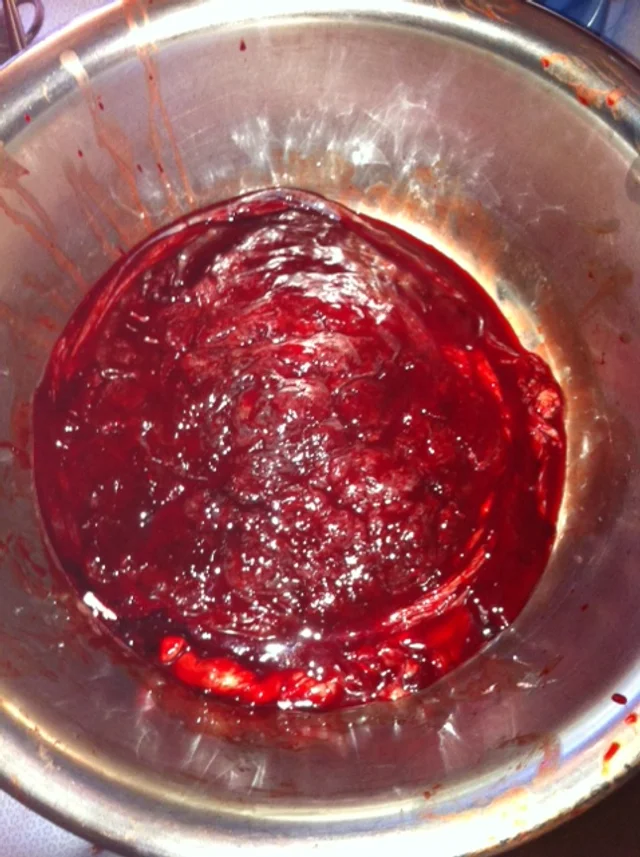
Chocolate Truffles, Fruit Smoothies, and Placenta Encapsulation
Placenta encapsulation is an ancient remedy that is purported to ward off postpartum depression and renew iron stores.
by Cynthya Dzialo, Birth Doula and Childbirth Educator
It's purported that ingesting placenta via encapsulation or chocolate truffle, fruit smoothie, or alcohol-extracted tincture, may naturally promote milk production, prevent postpartum depression, and speed healing. There's no current evidence that ingesting the placenta will provide any health benefit. If you are unsure if this long-time practice is right for you, keep your placenta on ice at the hospital and deep freeze it as soon as possible. You can encapsulate your placenta up to one year after its birth.
The CDC advises against ingesting placenta in any form. Placentophagy can be harmful to you and your baby. Here's a link to more info on their site. Right now, we don’t know if placentophagy has any effect on postpartum depression, and if any effect that it may have, maybe due to the placebo effect. More info is posted here in the National Library of Medicine.
Natural Afterbirth provides a clinical approach to placenta encapsulation services that protect the integrity of the placenta throughout the process. With trained specialists and a dedicated workspace designed solely for placenta encapsulation, their services are efficient and can process a placenta in less than 20 hours. Their specially designed workspace allows for better sanitation than an at-home kitchen, it also protects the placenta and those in the mother's family from unintended exposure to contaminates in a busy home.
Natural Afterbirth uses temperature-controlled equipment to ensure the placenta is not degraded by exposure to high temperatures or variations in temperatures. Their encapsulation process ensures that each capsule has a consistent amount of finely ground placenta to allow for proper dosing. It’s important to note each pill should contain pure placenta with no herbal additives that may cause unexpected side effects rendering the pills unusable. Natural Afterbirth is the go-to provider for area birth professionals, as well as, several national professional groups.
For more information and to make your purchase, please visit Natural Afterbirth, a partner provider of The Happiest Doulas. We have chosen to partner with Natural Afterbirth due to their efficiency and professionalism. For your safety, we strongly advise you to research your placenta processing options and choose a well-known and respected company such as Natural Afterbirth and we'd appreciate your telling them that we referred you.

