"Cynthya was our doula for the birth of our third child in April 2016. As this was my third birth, and I had been attended to by a doula at the first two, I knew that finding the right doula was crucial to a successful and satisfying birth." - Winter Wheeler-Young

6 Points For Birth Partners to Consider When Hiring a Labor Doula
Sometimes, one partner REALLY wants to hire a doula and the other can't justify the expense or won't face the realities of the upcoming birthday. Here are my suggestions of talking points for reserving doula service and private instruction for an optimal birth experience.

"HELP! My partner doesn't think we need to hire a doula."
If I had a dollar for every time I’ve heard this, I could fund a lot of postpartum meals.
It’s common for one partner to feel strongly about hiring a doula while the other struggles to justify the cost—or hasn’t fully grasped what labor and birth actually demand. Yet decades of research are clear: continuous labor support significantly improves birth outcomes. Doula-supported births are associated with lower cesarean rates, reduced use of Pitocin and pain medication, fewer NICU admissions, and higher overall satisfaction with the birth experience.
If you’re navigating this conversation at home, here are six important points every birth partner should consider.
1. How do you plan to support labor—hour after hour?
Labor isn’t a short event. It can last many hours—or even days. Are you prepared to provide hands-on comfort (counterpressure, hip squeezes, position changes) for 24+ hours straight? Have you learned how to recognize when labor is progressing—or when it’s stalling in a way that increases the likelihood of medical intervention?
A doula brings practiced, physical support that protects the birthing person and conserves the partner’s energy.
2. Are you ready to be the sole source of emotional, physical, and informational support?
During labor, your partner needs reassurance, grounding, encouragement, and calm—especially when things feel intense or unpredictable. They may also need help understanding medical options and advocating for alternatives when interventions are proposed.
That’s a tall order for someone also experiencing their own stress, fear, and fatigue. A doula fills the gaps so no one is carrying the full weight alone.
3. Who is supporting you during the birth?
Most partners are surprised to learn that nurses are typically in the room for only brief intervals—often just minutes per hour before active pushing.
Doulas don’t replace partners; they support them. Many partners tell us they felt calmer, more confident, and more present because someone was also looking out for them.
4. Preparation helps—but recall during labor is another story
Prenatal classes are valuable, but labor isn’t a test you take well-rested with notes in hand. It’s happening on little sleep, under pressure, while watching someone you love do something profoundly physical.
A doula removes the mental load: remembering positions, timing suggestions, troubleshooting stalls, and helping you adapt moment by moment—so you can focus on being emotionally present.
5. Is cost the concern? Consider the bigger financial picture
Cesarean births and extended hospital stays are expensive—often far exceeding the cost of doula support. Since continuous labor support is proven to reduce the risk of primary cesarean, hiring an experienced doula can be a cost-saving decision.
Many families use HSA/FSA funds for childbirth education and doula services. Our agency provides the necessary NPI and taxonomy information so you may pursue reimbursement through insurance or health savings accounts.
6. This isn’t opinion—it’s evidence-based care
The American College of Obstetricians and Gynecologists (ACOG) identifies continuous labor support as a key strategy in reducing unnecessary primary cesareans.
Research—including a large Cochrane review of over 15,000 births—shows that one-to-one labor support is associated with:
Lower cesarean rates
Higher satisfaction with the birth experience
No identified harms
Evidence Based Birth notes that while partners and providers can offer support, doulas consistently show stronger effects on key outcomes.
The bottom line
The most important thing a birthing person needs during labor is continuous support.
If you plan to birth without a doula, thorough preparation is essential. Our partner-focused coaching sessions are designed to build real, usable skills for labor day.
Birth is one of the biggest days of your life. You deserve to feel supported, prepared, and confident—together.
Related posts:
5 Reasons to Hire a Doula
Epidural, Please!
5 Reasons to Hire a Birth Doula
It may be your first, it may be your fourth, but when you’re pregnant and considering your baby’s birth and delivery, having the proper support team is critical in ensuring you and your baby get off to the right start. Did you know a doula can help with that?
by Megan Ciampa, Birth Boot Camp Childbirth Instructor
It may be your first or your fourth, but when you’re pregnant and considering your baby’s birth and delivery, having the proper support team is critical in ensuring you and your baby get off to the right start. Did you know a birth doula can help with that?

When I was pregnant with my first child in 2009, I heard this new-to-me term thrown around, “doula.” I learned it was Greek for “mothering the mother” and it’s a professional birth worker trained in childbirth and labor who provides emotional, educational, and physical support to the pregnant woman before, during, and after labor. Generally that means she is not one of your friends or family members, or a part of the medical staff. While I thought that sounded nice, I couldn’t imagine anyone else in my birth environment other than my husband and our midwife/medical team. However, I was then exposed to the statistics of labor and birth for when a laboring mom has a doula present, and I was shocked. Doula? Hired.
Here’s why you want to hire a birth doula:
With birth doulas, the rate of cesarean section decreases 28%. I didn’t know much when I was pregnant with my first baby, but I knew that if I could avoid a c-section, that would be ideal! A labor doula’s continuous support throughout childbirth help a mom feel more at ease, reduce discomfort, and help her find different positions to move into to help baby down and out the birth canal. A c-section, while it can be a life-saving surgery, is major abdominal surgery and can put mom and baby at risk during and after birth. (Statistics from Cochrane Review)
With a labor doula, the use of Pitocin decreases 31%. Have you ever watched A Baby Story on TLC, or any other reality birth TV? If you have, then you may have seen what happens when a mom who is laboring naturally, on her own, is given Pitocin (which is a synthetic version of Oxytocin, a hormone our body naturally produces during labor, breastfeeding, and lovemaking, which assists in making the uterus contract). When a woman is given pitocin, the intensity and strength of her contractions increase significantly. And because it’s a synthetic hormone, the body cannot respond with its own stress release mechanisms the same way, and it’s extremely uncomfortable for the laboring mom. While labor can be done without an epidural, many a woman opts for an epidural after pitocin is administered to help cope with this incredible intensity. (Statistics from Cochrane Review)
With doulas, the likelihood of spontaneous vaginal birth increases 12%. Spontaneous vaginal birth is the simplest kind of delivery process. It just means vaginal delivery happens on its own, without doctors or midwives using any tools like forceps or a vacuum, to help pull the baby out. This is a good thing because while any of these tools may occasionally be used for emergency purposes, they also come at a risk to the mom and baby. Doulas can help the mom get into a better birthing position that applies the right amount of pressure to her cervix to allow baby to come out safely. (Statistics from Cochrane Review)
With doulas, the risk of being dissatisfied with the birth experience decreases 34%! With a labor doula present, you can know you have probably tried every option and resource possible to ensure you have as good a birth experience as possible. Because they have knowledge, tools and other resources available to them to assist you, it relieves pressure and anxiety on your partner or spouse, who may also be needing some emotional support during labor, and helps equip them to help you. All of this in turn? Drives higher satisfaction for you during your birth experience. (Statistics from Cochrane Review)
With birth doulas, the length of labor can decrease by 25%! I don’t know about you, but when I watched A Baby Story and saw the clock ticking and how long those moms were laboring to bring their babies to the world, my empathetic heart hurt for them. Those can be some long, hard hours. So, with a doula present, who helps you feel more safe, secure, and emotionally present, often labors are shorter. With my first birth, my highly experienced doula had me try several positions: squatting, walking, rocking, sitting on the toilet (it relaxes you in an unexpected way--trust me!) to help me get the baby further down the birth canal. I’m convinced that without her efforts, my approximately 12 hour labor, which is pretty great for a first-time mom, would’ve lasted hours longer! (Statistics from americanpregnancy.org)
Experts agree that Cesarean Sections or c-sections, particularly among low-risk, first-time mothers, may not be necessary and can be actually be risky for mother and baby. Various evidence-based strategies aimed at hospitals and health care providers can help reduce c-sections in low-risk women. Evidence shows that doula support improves birth outcomes, including a vaginal delivery with lowered risk of episiotomy and other interventions.
A doula is a pretty great person to have around when you’re pregnant and giving birth, as well as afterwards in the postpartum period. While doulas weren’t so common about 10 years ago, they are sought after more than ever. Won’t you hire a birth doula today?
References:
https://evidencebasedbirth.com/the-evidence-for-doulas/
http://americanpregnancy.org/labor-and-birth/having-a-doula/


Prenatal Exercises and Birthing Positions for Symphysis Pubis Dysfunction
Symphysis Pubis Dysfunction (SPD) can make walking or sitting difficult, and sometimes extremely painful, affecting approximately one out of four pregnant women.

A condition called Symphysis Pubis Dysfunction (SPD) occurs when the ligaments that keep your pelvis aligned during pregnancy become too relaxed (due to the hormone relaxin) and causes excessive movement of the pubis symphysis. This can make walking or sitting difficult, and sometimes extremely painful, affecting approximately 1 of 4 pregnant women.
It is recommended that women with Symphysis Pubis Dysfunction give birth in an upright position with knees slightly apart. Another option is the all-fours position, keeping the knees close together. A waterbirth may be preferable as water allows buoyancy that can support the joints. And soaking in a warm tub is divine during labor!
Pelvic Floor Squeezes, Stability Exercises, Inner Thigh Stretches, Pelvic Tilts, Back and Side Stretches
Symphysis Pubis Disorder is not harmful, but it is painful. There are exercises to relieve SPD. If any exercise seems to cause you more pain, stop immediately. If your pain lasts or seems to get worse, talk to your obstetrician. For info about rehabilitation, prevention, and reoccurrence management of SPD in subsequent pregnancies, read this article which includes stability exercises.
Watch the below video for how to give birth more comfortably with SPD. Additionally, strengthening the pelvic floor muscles will help to stabilize the spine, support the pelvic organs, and prevent incontinence.


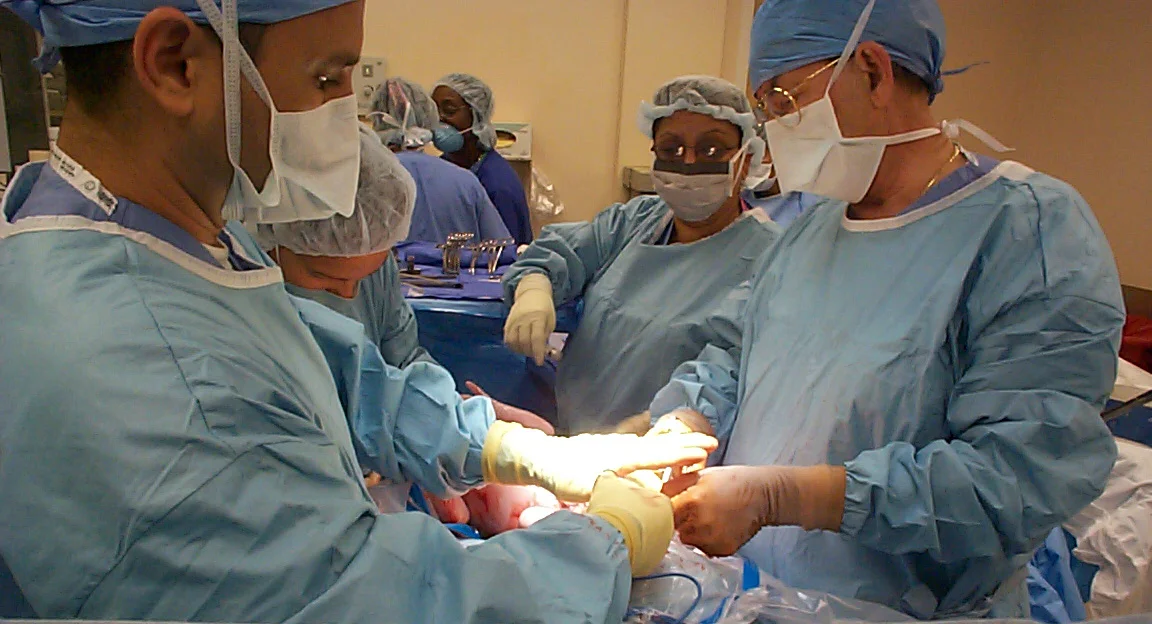
How To Avoid a C-section Without Changing Hospitals For Less Than The Cost of a Latte A Day
Get dependable support for less than $5 per day of your pregnancy. Think about that. Then think about the cost of a c-section and an extended hospital stay. Hiring an experienced doula who works well with your care providers WILL SAVE YOU MONEY.

Do you know how to avoid the primary c-section? Hire a doula.
The American College of Obstetricians and Gynecologists (ACOG) backs this claim. An excerpt from their website:
"Today, approximately 60% of all cesarean births are primary cesareans. Although cesarean birth can be life-saving for the baby and/or the mother, the rapid increase in cesarean birth rates raises significant concern that cesarean delivery is overused without clear evidence of improved maternal or newborn outcomes."
Read ACOG's full article published March 2014: Safe Prevention of the Primary Cesarean Delivery, which discusses ways to decrease cesarean deliveries, including:
Allowing prolonged latent (early) phase labor.
Considering cervical dilation of 6 cm (instead of 4 cm) as the start of active phase labor.
Allowing more time for labor to progress in the active phase.
Allowing women to push for at least two hours if they have delivered before, three hours if it’s their first delivery, and even longer in some situations, for example, with an epidural.
Using techniques to assist with vaginal delivery, which is the preferred method when possible. This may include the use of forceps, for example.
Encouraging patients to avoid excessive weight gain during pregnancy.
One of the main points is to use continuous labor and delivery support:
"Published data indicate that one of the most effective tools to improve labor and delivery outcomes is the continuous presence of support personnel, such as a doula. A Cochrane meta-analysis of 12 trials and more than 15,000 women demonstrated that the presence of continuous one-on-one support during labor and delivery was associated with improved patient satisfaction and a statistically significant reduction in the rate of cesarean delivery (111). Given that there are no associated measurable harms, this resource is probably underutilized."
“Approximately 60% of all cesarean births are primary cesareans.”
At the hospital, laboring families aren't truly supported during childbirth unless they have a doula present. Care providers are quite busy and frequently enter and exit the room leaving you unattended while they are busy with other patients. Our birth doulas stay by your side and provide support when you need it most!
Still wonder if doula support is necessary? Research your hospital's c-section rate - many metro hospitals are WELL ABOVE the national average of 32.2%. Afterwards, watch The Business of Being Born, a documentary "eye-opener" about birth in America.
Simply put, our team helps you obtain your true childbirth options so you can have a great labor and birth experience.
For less money than you'd spend on a latte a day, you can hire an experienced labor doula.
Get dependable support for less than $5 per day of your pregnancy. Think about that. Then think about the cost of a c-section and an extended hospital stay. Hiring an experienced doula who works well with your care providers WILL SAVE YOU MONEY.
Many of our clients use their HSA/FSA debit cards to pay for childbirth services such as classes and doula support. Our agency includes our NPI number and taxonomy code on our order confirmations so you may attempt reimbursement from your insurance company or HSA/FSA accounts.
You should also note that we offer eGiftCards. If you receive a gift card after to you after you've paid, you'll be refunded the amount to the credit card used to reserve services through our website.
“For less money than you’d spend on a latte a day, you can hire help from an experienced labor doula.”
You'll remember your birthing experience forever. I wish you and your family a healthy and happy birthday.
Be well,
Cynthya
Click to visit http://www.lamaze.org/p/cm/ld/fid=160
Reference: Safe Prevention of the Primary Cesarean Delivery http://www.acog.org/Resources-And-Publications/Obstetric-Care-Consensus-Series/Safe-Prevention-of-the-Primary-Cesarean-Delivery

How Does a Braxton-Hicks Contraction Feel?
What does a Braxton-Hicks contraction feel like?